Dr MARTIN VASQUEZ

My photo
Mesa, Arizona, United States
EDUCATION: Holt High School, Holt Mich., Lansing Community College, Southwestern Theological Seminary, National Apostolic Bible College. MINISTERIAL EXPERIENCE:61 years of pastoral experience, 11 churches in Arizona, New Mexico and Florida. Missionary work in Costa Rica. Bishop of the Districts of New Mexico and Florida for the Apostolic Assembly. Taught at the Apostolic Bible College of Florida and the Apostolic Bible College of Arizona. Served as President of the Florida Apostolic Bible College. Served as Secretary of Education in Arizona and New Mexico.EDUCACIÓN:Holt High School, Holt Michigan, Lansing Community College, Seminario Teológico Southwestern, Colegio Bíblico Nacional. EXPERIENCIA MINISTERIAL:51 años de experiencia pastoral, 11 iglesias en los estados de Arizona, Nuevo México y la Florida. Trabajo misionera en Costa Rica. Obispo de la Asamblea Apostólica en los distritos de Nuevo México y La Florida. He enseñado en el Colegio Bíblico Apostólico de la Florida y el Colegio Bíblico Apostólico de Arizona. Presidente del Colegio Bíblico de la Florida. Secretario de Educación en los distritos de Nuevo México y Arizona.

Wednesday, January 30, 2013

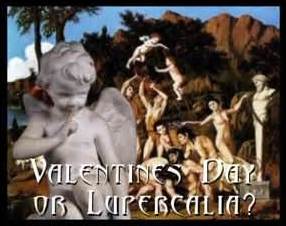
SAINT VALENTINE’S DAY


“Thus saith the Lord, Learn not the way of the heathen…For the customs of the people are vain…” (Jeremiah 10:2-3)

February 14 is called by some, Valentine's Day, but it is historically known as the day of Saint Valentine. In any encyclopedia and almost in any dictionary, we see that the Roman Cupid was the same Greek Eros, symbols both, of sensual love. Cupid was a god of the Romans and this explains why the Roman Catholic institution put it in the Gregorian calendar, only with the name of “Saint Valentine,” on February 14, doing a miscellany of pagan religions.

In the Greek religion they were rejuvenating the god Eros, until he became an infant in the Hellenic era. The words “eroticism” and “erotic” come precisely from the Greek word “Eros”, and the main center of worship of this god was in Boeotia, Thespiae, where they celebrated in his honor  the "Erotidias" (great orgies with erotic sexual frenzies of all kinds), but he also shared a sanctuary with Aphrodite (Greek goddess of fertility, beauty and love), in the northern part of the Acropolis of Athens, and this does not surprise us, given that this Greek goddess was his mother (mother of Eros or Cupid) and as this one, he has had different names, according to the country that have adopted them. Thus, in history we find Eros as the son of Ashtaroth, son of Iris, son of Aphrodite, son of Venus, etc. And it is that mother and child have been represented through the centuries by different cultures and in different and similar ways.

In similar fashion, we see Eros as the Slavonic gods Yarilo and Kupala (Yarilo comes from the adjective yari that means ardently, passionately, uncontrollably). We find the worship of Yarilo deeply established among Slavonic pagans, until the end of the 18th century; this was the god of spring and of fertility and for this reason he was honored in the spring, at planting time. The celebration and the sending of cards of Saint Valentín became popular in England in the 14th century; because the poet Geoffrey Chaucer, mentioned that it is on February 14 when the birds begin to mate. English youth still accustomed on this day the exchanging of anonymous letters full of flirtatious remarks and satires, and it is noteworthy to mention that the English word "sow" means "seeding" and “to do juvenile escapades ”, this is also what we see in relation with the gods Yarilo and Kupala (gods of sowing) with the juvenile escapades of Valentín. Kupala means to bathe and in June, the Slavs would bathe in the rivers, and would drown their idol when the sunset or they would burn it. The worship of trees was essential in the worship of Yarilo and this same god was worshiped by the Serbian, who only burned it.

This way we can realize the real identity of Valentin or Cupid who is the same son of the goddess, Aphrodite or Ashtaroth (Judges 2:13-14; 10:6), or Semiramis, or Diana; the latter is represented, as her son, with a bow and arrow, known as the goddess of the forest and the hunt (Diana the Warrior). About Cupid's arrows, this has several stories which have also varied according to culture, histories that are summed up in an incestuous relationship and abnormal between mother, son and daughter-in-law, in which the heart intervenes, symbolizing the profane love.

Sexual love has always been the essential ingredients in the observance of Valentine’s Day. This was true in ancient Rome, during the Middle Ages, and it is true today. Moreover, the mid February date of this observance has not changed. Only the name has changed, since February 14 is the eve of the Roman festival originally called Lupercalia.

The Valentine of Roman days was less refined, however, than its modern celebration. After sacrifice of goats and a dog, the priests, called Luperci, traditionally ran, in two bands, a marked course around the city on this day, scantily dressed only in goatskin girdles and carrying strips of goat skin with which they struck women to take away their infertility. The strips bore the name “Februa,” a word connected with Februare, “to purify,” hence the day was called “Februatus” and the month Februarius.

Lupercalia was, or became, connected with the legendary she-wolf (Latin lupus-wolf) who suckled Remus and Romulus, the eponymous founders of Rome; and “wolf” was a synonym in Rome for a sexually available woman. So the day became connected with Venus, goddess of sexual love. Venus’ son Cupid also played an important part in this love feast.

Roman mythology ascribes to mother and son the power to instill passion in people, and with their love potion they also had the power to make love cease. Cupid is often portrayed shooting arrows into the hearts of hapless victims. Usually naked, winged and armed with a bow and arrow, Cupids are still portrayed in modern times on Valentine cards.

As can be well imagined, a bawdy festival of sex and love was popular with the masses of Rome. The Christian church, on the other hand, had no desire to perpetuate Lupercalia and so tried to uproot this love feast. But the attempt met with failure. The pagan population of the empire, as well as many recently converted Christians, continued its observation.

Eventually the church decided that the only way this matter could be handled was to let the people of the empire, including members of the church, continue keeping the Lupercalia feast, but to rededicate it for another purpose. This policy of religious compromise was used quite effectively by the early Catholic Church fathers.

Once the Roman emperors embraced Christianity, church growth became explosive. In order to quickly convert the pagan populace, the church felt it could not be hard on prospective members. Some church leaders reasoned that if Christianity was to conquer the world, it could best do so by relaxing what the world perceived as too rigid principles of the teachings of Christ.

Another effective way of gaining members was to blend and incorporate popular pagan beliefs and practices with Christian ones, syncretism. Seeing that the masses could not be persuaded to relinquish many of their superstitious customs, the attempt was made to add Christian concepts to the superstitious feasts. The historical development of the Christian church shows that, for almost every pagan ceremony, some Christian rite was introduced.

So, beginning with A.D. 496, the Roman populace could still come to their love feast, no longer dedicated to Venus, the goddess of love, but to the Virgin Mary and the saints. The Lupercalia was officially christened “Saint Valentine’s Day.”  The attention of the masses on each February 14 was now to be centered on Christian saints. People could still draw lots for their “Valentines,” but with the names of saints written on them instead.

The name was chosen because third century church records already revealed a tradition about a certain presbyter named Valentine who had married couples secretly against the edict of Emperor Claudius II and had been executed for doing so. He had now been elevated to sainthood, and as it happened, his day of commemoration was February 14, the same day as Lupercalia. So Gelasivs, bishop of Rome, officially Christianise Lupercalia and renamed it “Saint Valentine’s Day.”

When the Protestants came on the scene, Saint Valentine fell into the background, since Protestants did not hold to the concept that saints are worthy of celebration. People went back to drawing the names of ordinary young men and women choosing themselves partners for the celebration. Saints and Christianity had never become a major part of the festival.

Cupid was still there. So were the arrowed hearts. Lots were still drawn as chance directed, the day was still the original Roman day and it was as popular as ever. In the late Middle Ages a lot of folklore developed, such as the belief that birds were said to mate on February 14. It was also held that the first person of the opposite sex one encountered on the morning of Valentine’s Day was to become one’s future spouse. Love potions were considered especially potent on this day.

To participate in the practices of Valentine’s Day or Cupid, although they have been modified over the years and candies and romantic cards are given, we are displeasing God, as well as when He was upset with the people who served Ashtaroth (Judges 10:6-7). If we say that we serve the true God, it is best that we do so taking into account I Samuel 7:3: Then Samuel spoke to all the house of Israel, saying, “If you return to the Lord with all your hearts, then put away the foreign gods and the Ashtaroth from among you, and prepare your hearts for the Lord, and serve Him only; and He will deliver you from the hand of the Philistines.”


Wednesday, January 23, 2013

EL RAPTO DE LA IGLESIA


La iglesia es el cuerpo espiritual de Cristo (I Cor 12:12-13; Efesios 1:22-23), formada por todos aquellos que han puesto su fe en Cristo (Gálatas 3:26-28) durante el período desde Pentecostés hasta el Rapto de la Iglesia. Los salvados de otras edades se llaman creyentes, o santos de Dios, pero no son parte de la iglesia.
En I Corintios 15:51-53 el Apóstol Pablo usa una palabra que tiene un significado especial, teológico. Él llama a las verdades que está a punto de compartir un “misterio.” Esta palabra significa: Un secreto sagrado, hasta ahora desconocido, pero ahora revelado por fin. Lo qué iba a pasar con la iglesia era desconocido e imprevisto por los profetas del Antiguo Testamento, porque la Era de la Iglesia en sí era un "misterio" (Efesios 3:1-7).
Cuando Cristo resucitó de entre los muertos, Él era la misma persona. Su cuerpo aún tenía las marcas de la crucifixión en ella. Y sin embargo era un cuerpo transformado, un "cuerpo glorificado." La Biblia promete que cuando el Señor regrese Él "transformará nuestro cuerpo mortal para que sea semejante a Su cuerpo glorioso" (Fil. 3:20-21). Estos serán cuerpos que nunca se envejecerán, nunca mueren, cuerpos apto para el reino eterno.
En el Latina, la frase "arrebatados" es rapturo, que nos da la palabra rapto. Este evento se denomina comúnmente "el Rapto de la Iglesia," cuando los santos vivos serán arrebatados a la presencia del Señor. El Rapto de la Iglesia ocurrirá  instantáneamente, de forma rápida, en un abrir y cerrar de ojos (I Corintios 15:51, 52; Filipenses 3:20, 21).Este pasaje indica claramente que todas las personas involucradas se reunirán con el Señor en el aire o las nubes (I Tesalonicenses 4:13 – 17).
La Palabra de Dios habla del Rapto de la Iglesia como "inminente", lo que significa que podría ocurrir en cualquier momento. Sólo Dios sabe cuando este evento se llevará a cabo (Marcos 13:32). No hay eventos previstos o signos descritos en la Biblia que deben suceder antes del Rapto. Parece claro que Pablo estaba esperando la posibilidad del Rapto en su curso de la vida, ya que él habla de "nosotros los que vivimos ..." seremos arrebatados. Él mismo esperaba con alegría al Salvador (Filipenses 3:20), y elogia a otros cristianos por esperando ansiosamente la venida de Cristo (I Tes. 1:9-10). Santiago escribe que "la venida del Señor está cerca ... he aquí, el juez está delante de la puerta" (Santiago 5:8-9). De estas y otras declaraciones se concluye que el arrebatamiento de la iglesia podría suceder en cualquier momento. Debemos vivir en continua expectativa de ÉL (Tito 2:13).
Aunque algún los agrupen juntos como ambos pertenecientes a la venida del Señor, el Rapto y la Segunda Venida de Cristo son eventos muy diferentes, separados por siete años. El Rapto de la Iglesia no es la Segunda Venida de Cristo. El Rapto de la Iglesia va a ser una sorpresa para mucha gente. Sólo los verdaderos creyentes participaremos del rapto. En la Segunda Venida de Cristo todo ojo le verá.
En la Biblia el rapto de la Iglesia siempre se refiere como la "venida del Señor" o “los días del Hijo del Hombre” o “la revelación del Hijo del hombre”, pero nunca “la Segunda Venida de Cristo ". El Rapto de la Iglesia es más que una doctrina del Nuevo Testamento y fue revelado a Pablo, mientras que la Segunda Venida de Cristo con los santos, para venir a vivir en la tierra, no es sólo una doctrina del Nuevo Testamento, pero es una de los temas principales del Antiguo Testamento. Los profetas del Antiguo Testamento nunca vieron la Iglesia del Nuevo Testamento, y mucho menos el Rapto de la Iglesia.
Aquí hay algunas diferencias básicas entre los dos:
a. El rapto es inminente (lo que significa que puede suceder en cualquier momento), sin ningunas señales predicha primero. Pero la Segunda Venida sigue un tiempo de "gran tribulación" en la tierra, con muchos signos que deben cumplirse primero.
b. En el Rapto, Cristo viene en el aire por su iglesia. Pero en la Segunda Venida, Cristo viene a la tierra con su iglesia.
c. El propósito de Cristo en el Rapto es para reclamar y recompensar a su novia (la iglesia). El propósito de Cristo, en su venida segunda es premiar el remanente creyente de Israel y establecer su reino terrenal.
d. En el Rapto, Cristo será invisible a los inconversos de la tierra. En su segunda venida, "todo ojo le verá."
e. Después del Rapto, Cristo recompensará a su iglesia en Su tribunal (Bema). Después de su segunda venida, Cristo juzgará a las naciones por su tratamiento de los judíos, y luego bendecir a Israel en su tierra.
f. El Rapto es un "misterio" desconocido e imprevisto en los tiempos del Antiguo Testamento. La Segunda Venida de Cristo para reinar  se enseña ampliamente en el Antiguo Testamento.
El propósito del rapto es para que Cristo venga por los santos antes de la Gran Tribulación (I Tesalonicenses 4:13 – 17). Cristo tiene que venir por sus santos antes de que pueda volver con ellos. En la Segunda Venida, Cristo viene de nuevo con los santos después de la Gran Tribulación para vivir y reinar sobre la tierra por mil años (Judas 14; Apocalipsis 20:6). Cristo tiene que resucitar a los muertos “en El” de entre los muertos impíos en sus tumbas para recibir sus recompensas con los que estén vivos y todos serán cambiados de la mortalidad a la inmortalidad (I Corintios 15:51; II Corintios 5:1-10).
El Rapto tendrá un efecto devastador en el mundo. Basta pensar en lo que ocurrirá en este mundo cuando todos los creyentes sean raptados de repente. Leemos en el Libro de Apocalipsis 4:1 sobre el Rapto de la Iglesia. Apocalipsis, capítulo 1 al capítulo 3 se refiere a la Iglesia aquí en la tierra. Apocalipsis, capítulo 4 comienza con el Rapto de la Iglesia, y luego hasta el capítulo 19 es lo que va a suceder aquí en la tierra. El capítulo 19 se refiere a las Bodas del Cordero, y hasta el capítulo 22 se trata de las relaciones definitivas de Dios y el cielo nuevo.
Mateo capítulo 25 no se refiere al Rapto de la Iglesia. Sin embargo, Mateo capítulo 24 se refiere al Rapto de la Iglesia y los judíos que pasarán por la gran tribulación porque no aceptaron a Jesucristo como el Mesías. Lucas 17:22 – 37 es una profecía de la batalla de Armagedón.
Después de que el Rapto ha tenido lugar los creyentes recibirán sus recompensas en el cielo y luego tendrá una parte en las Bodas del Cordero. Este período tendrá una duración de aproximadamente 7 años. Durante este tiempo la Gran Tribulación se llevará a cabo simultáneamente en la tierra. Luego la Segunda Venida del Cristo con todos sus santos acontecerá y la batalla de Armagedón se llevará a cabo en la tierra. Satanás y sus seguidores serán atados por mil años y durante este tiempo habrá paz en la tierra. Después de los mil años, Satanás será liberado y entonces Dios derrotará a Satanás y sus seguidores y lanzar a Satanás ya todas las personas cuyo nombre no está escrito en el Libro  de la vida en el lago de fuego para siempre. Después de esto el mundo existente será destruido por el fuego y un Nuevo Cielo y una Nueva Tierra bajará del cielo y todos los creyentes y santos vivirán allí para siempre como Dios había planeado en un principio.

THE RAPTURE OF THE CHURCH


The church is the spiritual body of Christ (I Cor. 12:12-13; Eph. 1:22-23), made up of all those who put their faith in Christ (Gal. 3:26-28) during the period from Pentecost to the Rapture of the Church. The saved of other ages are called believers, or saints of God, but they are not part of the church.
In I Corinthians 15:51-53 the Apostle Paul uses a word that has a special, theological meaning. He calls the truths he is about to share a “mystery.” This word means: a sacred secret, previously unknown, but now at last revealed. What is to happen to the church was unknown and unforeseen by the Old Testament prophets because the Church Age itself was a “mystery” (Eph. 3:1-7).
When Christ rose from the dead, He was the same Person. His body even had the marks of His crucifixion upon it. And yet it was a transformed body, a “glorified body.” The Bible promises that when the Lord returns He will “transform our mortal body that it may be conformed to His glorious body” (Phil. 3:20-21). These will be never-aging, never-dying bodies fitted for the eternal kingdom.
In Latin, the phrase “caught up” is rapturo, which gives us the word rapture. This event is commonly called “the Rapture of the Church,” when the living saints will be snatched away into the presence of the Lord. The Rapture of the Church will happen instantly, quickly, in a twinkling of an eye (I Corinthians 15:51, 52; Philippians 3:20, 21). This Scripture clearly states that all of the involved people will meet the Lord in the air or clouds (I Thessalonians 4:13-17).
The Word of God speaks of the Rapture of the Church as being “imminent,” meaning it could happen at any moment. Only God knows when this event will take place (Mark 13:32). There are no predicted events or signs described in the Bible which must come before the Rapture. It seems clear that Paul was expecting the possibility of the rapture in his own lifetime, since he speaks of “we who are alive...” being caught up. He himself was joyfully waiting for the Saviour (Phil. 3:20), and commends other Christians for watching eagerly for Christ’s coming (I Thess. 1:9-10). James writes that “the coming of the Lord is at hand...behold, the Judge is standing at the door” (Jas. 5:8-9). From these and other such statements we conclude that the catching away of the church could happen at any time. We are to live in continuing expectation of it (Tit. 2:13).
Though some group them together as both pertaining to the Lord’s return, the Rapture and the Second Coming Christ are distinctly different events, separated by seven years. The Rapture of the Church is not the Second Coming of Christ. The Rapture of the Church will be a surprise to many people. Only the true believers will partake of the rapture. At the Second Coming of Christ every eye will see Him.
In the Bible the Rapture of the Church is always referred to as the “coming of the Lord” or “the days of the Son of Man” or “the revelation of the Son of Man” but never the “Second Coming of Christ”. The Rapture of the Church is purely a New Testament doctrine and was first revealed to Paul, while the 'Second Coming of Christ' with the saints, to come and live on earth, is not only a New Testament doctrine, but is one of the chief themes of the Old Testament. The Old Testament prophets never saw the New Testament Church, much less the Rapture of the Church.
Here are a few basic differences between the two:
a. The Rapture is imminent (meaning it can happen at any moment), with no predicted signs needed first. But the Second Coming follows a time of “great tribulation” on the earth, with many signs which must be fulfilled first.
b. At the Rapture, Christ comes in the air for His church. But at the Second Coming Christ comes to the earth with His church.
c. Christ’s purpose in the rapture is to claim and reward His bride (the church). Christ’s purpose at His second coming is to reward the believing remnant of Israel and set up His earthly kingdom.
d. At the Rapture, Christ will be invisible to the unsaved of earth. At His second coming, “every eye shall see Him.”
e. Following the Rapture, Christ will reward His church at His Judgment Seat (Bema). Following His second coming, Christ will judge the nations for their treatment of the Jews, and then bless believing Israel in her Land.
f. The Rapture is a “mystery” unknown and unforeseen in Old Testament times. The Second Coming of Christ to reign is taught extensively in the Old Testament.
The purpose of the Rapture is for Christ to come for the saints before the Great Tribulation (I Thessalonians 4:13 – 17). Christ must come for His saints before He can come back with them. At the Second Coming, Christ comes back with the saints after the Great Tribulation to live and reign on the earth for a thousand years (Jude 14 and Revelation 20:6). Christ has to resurrect the dead 'in Him' from among the wicked dead in their graves to receive their rewards with those who are alive and all will be changed from mortality to immortality, 1 Corinthians 15:51; II Corinthians 5:1 - 10.
The Rapture will have a devastating effect on the world. Just think of what will happen in this world when all the believers are raptured all of a sudden. We read in the Book of Revelation 4:1 about the Rapture of the Church. Revelation chapter 1 to chapter 3 is about the Church here on earth. Revelation chapter 4 starts off with the Rapture of the Church, and then up to chapter 19 is what is going to happen here on earth. Chapter 19 is about the Marriage Supper of the Lamb and up to chapter 22 is about God's final dealings and the New Heaven.
Matthew chapter 25 is not referring to the Rapture of the Church. However, Matthew chapter 24 is referring to the Rapture of the Church and the Jews who will go through the great tribulation because they did not accept Jesus Christ as the Messiah. Luke 17:22–37 is a prophecy on the Battle of Armageddon.
After the Rapture has taken place the true believers will receive their rewards in heaven and will then have a part in the Marriage Supper of the Lamb. This time will last approximately 7 years. During this time the Great Tribulation will be taking place simultaneously on earth. Then the Second Coming of the Lord with all his saints will take place and the Battle of Armageddon will take place on earth. Satan and all his followers will be bound for a thousand years and during this time there will be peace on earth. After the thousand years Satan will be released and then God will defeat Satan and his followers and throw Satan and every person whose name is not written in the Lamb's Book of life in the lake of fire for ever. After this the existing world will be destroyed by fire and a New Heaven and a New Earth will come down from heaven and all the believers and saints will live there forever as God had planned in the beginning.

Wednesday, January 16, 2013

LAS CINCO CORONAS

“Hermanos, yo mismo no pretendo haberlo ya alcanzado; pero una cosa hago: olvidando ciertamente lo que queda atrás, y extendiéndome a lo que está delante, prosigo a la meta, al premio del supremo llamamiento de Dios en Cristo Jesús. Así que, todos los que somos perfectos, esto mismo sintamos; y si otra cosa sentís, esto también os lo revelará Dios. Pero en aquello a que hemos llegado, sigamos una misma regla, sintamos una misma cosa.” Filipenses 3:13-16

Hay cinco coronas
(stéfanos) especificas que se mencionan en el Nuevo Testamento. Las coronas pueden ser más apropiadamente llamados coronas o guirnaldas, como las usadas en las cabezas de los campeones atléticos. Las guirnaldas serán nuestros premios cuando llegue el momento que el Señor entrega los premios a los creyentes en el Tribunal. Ellos serán los premios por nuestro caminar y fieldad a Dios y Su Palabra. No están disponibles para nosotros ahora, pero los vamos a recibir después del regreso de Cristo.

LA CORONA INCORRUPTIBLE (I Corintios 9: 25)

“Todo aquel que lucha, de todo se abstiene; ellos, a la verdad, para recibir una corona corruptible, pero nosotros, una incorruptible.”

La  primera corona que se menciona es la corona "incorruptible". Esto significa que es una corona que no será jamás destruido, nunca se convertirá en polvo. Vamos a ser inmortal, y también lo será esta corona. Para entender completamente esta corona vamos a ver la siguiente escritura:
 
I Corintios 9: 19-23: “
Por lo cual, siendo libre de todos, me he hecho siervo de todos para ganar a mayor número. Me he hecho a los judíos como judío, para ganar a los judíos; a los que están sujetos a la ley (aunque yo no esté sujeto a la ley) como sujeto a la ley, para ganar a los que están sujetos a la ley; a los que están sin ley, como si yo estuviera sin ley (no estando yo sin ley de Dios, sino bajo la ley de Cristo), para ganar a los que están sin ley. Me he hecho débil a los débiles, para ganar a los débiles; a todos me he hecho de todo, para que de todos modos salve a algunos. Y esto hago por causa del evangelio, para hacerme copartícipe de él.”

Pablo describe la forma en que trabajó para ganar a otros a la Palabra de Dios. Esto es el tipo de vida cristiana a la que todos pueden aspirar.

I Corintios 9: 24: “
¿No sabéis que los que corren en el estadio, todos a la verdad corren, pero uno solo se lleva el premio? Corred de tal manera que lo obtengáis [ganar].”

Aquí nuestra caminata se compara con un esfuerzo atlético como una carrera. La traducción Lamsa de la Peshitta (arameo) texto dice lo siguiente:

“¿No sabéis que los corredores en el estadio, todos corren, pero sólo uno es victorioso? Por lo que debes correr que puede obtener la victoria.”

Se nos insta a correr con la intención de ganar. Estamos corriendo una carrera para ganar una corona.

I Corintios 9: 25 de la traducción Lamsa dice lo siguiente:

Y todo aquel que lucha en el concurso libera su mente de todo lo demás. Y sin embargo, correr para ganar una corona que es perecedero, pero nosotros para ganar una que es eterna.”

Un atleta campeón se centra en la carrera en la mano. No se distraiga con los ruidos o actividades que van a su alrededor. Si se distraen que no se ejecutan bien. Sin embargo, todo lo que un deportista gana un premio perecederos. No va a durar para siempre. El premio para los que competimos es eterno.

I Corintios 9: 26: “
Así que, yo de esta manera corro, no como a la ventura; de esta manera peleo, no como quien golpea el aire.”

[Traducción Lamsa: “Por lo tanto así corro, no por algo que es incierto, y yo así que luche, no como quien golpea el aire.”]

Pablo dijo que él correa por algo que es cierto. Cuando estaba en el ring de boxeo luchó e hizo el recuento de los golpes. No lo hizo como golpear el aire.

I Corintios 9: 27: “Sino que golpeo mi cuerpo, y lo pongo en servidumbre, no sea que habiendo sido heraldo para otros, yo mismo venga a ser eliminado.”

[Traducción Lamsa: “Pero conquisto y domino mi cuerpo para que, por ninguna posibilidad, que habiendo sido heraldo para otros, yo me retracto.”]

Pablo mantuvo su cuerpo en sujeción a su mente (mente renovada), por lo que después de haber llamado a otros a unirse a la competencia (versículos 19 - 23), no había ninguna posibilidad que iba a fracasar en el logro de la recompensa.

La Corona Incorruptible estará disponible para los creyentes comprometidos y enfocados. Los que renuevan sus mentes, y práctica la disciplina y el autocontrol como un atleta comprometido son los que recibirán el premio.

CORONA DE GANADOR DE ALMAS (I Tesalonicenses 2, 19, 20)

“Porque ¿cuál es nuestra esperanza, o gozo, o corona de que me gloríe? ¿No lo sois vosotros, delante de nuestro Señor Jesucristo, en su venida? Vosotros sois nuestra gloria y gozo.”

La corona de regocijo se describe aquí es un ejemplo de cuando nosotros, como creyentes, se espera que se regocijan en voz alta o exaltar. Cuando Cristo regrese y todos vamos a estar juntos, podemos dejar que todo el mundo lo sepa. Nuestros hermanos y hermanas que ganamos para Dios formaran la corona de regocijo.

Filipenses 3: 20, 21: “Mas nuestra ciudadanía [nacionalidad] está en los cielos, de donde también esperamos al Salvador, al Señor Jesucristo, el cual transformará el cuerpo de la humillación nuestra, para que sea semejante al cuerpo de su gloria, de acuerdo a la operación con la cual puede también sujetar a sí mismo todas las cosas.”

Esperamos con interés el regreso de Jesucristo. Cuando él vuelve, nuestros cuerpos terrenales, mortales serán cambiados para ser como él: inmortal y glorioso.

Filipenses 4: 1: “Por lo tanto, hermanos míos amados y deseados, gozo y corona mía, estad así firmes en el Señor, amados.”

Dos veces Pablo se refiere a los creyentes como "muy amado", así que sabemos cómo amaba a sus hermanos y hermanas en Cristo. Además, son su "gozo y corona". Cada día debemos estar agradecidos por todos los creyentes en el mundo. En el día del regreso de Cristo, nos reunimos y llevaremos la corona de regocijo.

CORONA DE JUSTICIA (II Timoteo 4: 7-8)

“He peleado la buena batalla [correr una gran carrera], he acabado la carrera, he guardado la fe [tu creyente]. Por lo demás, está reservada para mí una corona de justicia que el Señor, juez justo, me dará en aquel día; y no sólo a mí, sino también a todos los que aman su venida.”

[Traducción Lamasa: He peleado la buena batalla, he acabado la carrera, he guardado mi fe: Por lo demás, se conserva para mí la corona de justicia, que mi Señor, juez justo, me dará en aquel día, y no sólo a mí, sino también a todos los que aman su venida.]

La corona de justicia hace una referencia deportiva como la "corona incorruptible". Pablo dice que él ha peleado la buena batalla - él no se dio por vencido. Terminó la carrera - siguió creyendo. Debido a esto, la corona de justicia se ha reservado para él, y para otros que esperan la venida de Jesucristo. "Justicia" significa que algo es justo y recto. ¿Cuántas veces hemos leído una noticia, o visto algo en la televisión que nos hizo decir: "Simplemente no es justo"? Eso no va a pasar ni una sola vez cuando Cristo regrese. Pablo escribió a la iglesia con el fin de exhortarlos (nosotros) a serle fiel a Dios a la luz de la esperanza de Su retorno. Si miramos hacia adelante a nuestra corona de justicia, podemos mantenernos firmes y seguros en estos momentos.

LA CORONA DE LA VIDA (Santiago 1: 12)

“Bienaventurado el varón que soporta la tentación; porque cuando haya resistido la prueba, recibirá la corona de vida, que ha prometido el Señor a los que le aman.”

Feliz es la persona que sufre (permanece firme después de que otros se han dado por vencidos) pruebas y tentaciones. Porque cuando haya resistido la prueba, recibirá (manifiesto) de la corona de la vida (la vida en toda su plenitud, completar).

Apocalipsis 2: 10, 11: “No tengas ningún temor de las cosas que has de padecer: He aquí, el diablo echará a algunos de vosotros en la cárcel, para que seáis probados, y tendréis tribulación por diez días: Sé fiel hasta la muerte, y yo te daré la corona de la vida. El que tiene oído, oiga lo que el Espíritu dice a las iglesias que venciere, no sufrirá daño de la segunda muerte.”

Apocalipsis 3: 10, 11: “Porque has guardado la palabra de mi paciencia, yo también te guardaré de la hora de la tentación que ha de venir sobre el mundo entero, para probar a los que moran sobre la tierra. He aquí, yo vengo presto; retén lo que tienes, para que ninguno tome tu corona.”

A las iglesias se les exhorta a ser firmes en la cara de las pruebas y tribulaciones. Cuando los superamos, recibiremos la corona de vida, y no se enfrentará a la "muerte segunda". La "segunda muerte" es la muerte final:

Apocalipsis 20: 14, 15: “Y la muerte y el Hades fueron lanzados al lago de fuego. Esta es la muerte segunda. Y el que no fué hallado escrito en el libro de la vida fue lanzado al lago de fuego.”

Debido a que vamos a recibir "la corona de la vida", tenemos vida eterna. El lago de fuego es reservado para todos los malhechores y no creyentes.

CORONA DE GLORIA (I Pedro 5, 1-4)

“Los ancianos que están entre vosotros, yo, que soy anciano también con ellos, y testigo de los sufrimientos de Cristo, y también participante de la gloria que será revelada: Apacentad la grey de Dios que está entre vosotros, cuidando de ella, no por fuerza, sino voluntariamente; no por ganancia deshonesta, sino con ánimo pronto; Ni por ser señores sobre la herencia de Dios, sino siendo ejemplos de la grey. Y cuando el Príncipe de los pastores se manifieste, vosotros recibiréis la corona de gloria que no se marchita.”

Pedro escribe esto a los ancianos de la iglesia, por lo que ver la corona de gloria estará a disposición de los líderes en la iglesia. Se supone que deben alimentar el 'rebaño' la Palabra sin diluir y perfecta de Dios, no por dinero o cualquier otro beneficio personal, pero de amor y de voluntad. Ellos no son "señores" de los otros creyentes, pero debe predicar con el ejemplo. Si lo hacen, dice Pedro, cuando Cristo (el Príncipe de los pastores) devuelve recibirán una corona de gloria que no se marchita. Además, es eterno, y el color y el brillo permanecerán para siempre.

Las cinco coronas serán parte de nuestra recompensa que recibimos después del regreso de Cristo. La Palabra de Dios nos dice algunas cosas sobre las coronas, pero no todo. Una gran parte de la recompensa será la sorpresa de descubrir todo acerca de nuestra nueva vida, y los privilegios y responsabilidades que van con él. Por ahora, podemos hacer lo mejor que podamos para Dios, y esperamos con interés la Esperanza, el regreso de Cristo.

THE FIVE CROWNS

Brethren, I do not count myself to have apprehended; but one thing I do, forgetting those things which are behind and reaching forward to those things which are ahead, I press toward the goal for the prize of the upward call of God in Christ Jesus. Therefore let us, as many as are mature, have this mind; and if in anything you think otherwise, God will reveal even this to you. Nevertheless, to the degree that we have already attained, let us walk by the same rule, let us be of the same mind.” Philippians 3:13-16

There are five specific crowns (stephanos) mentioned in the New Testament. The crowns can more appropriately be called wreaths, or garlands, like the ones worn on the heads of athletic champions. The garlands will be our prizes when it comes time for the Lord to hand out awards to the believers at the Judgment Set. They will be the awards for our walk and faithfulness to God and His Word. They are not available to us now, but we will receive them after Christ's return.

THE INCORRUPTIBLE CROWN (I Corinthians 9: 25)

"And every man that striveth for the mastery is temperate in all things. Now they do it to obtain a corruptible crown; but we an incorruptible."

The first crown mentioned is the 'incorruptible' crown. This means it is a crown that will never be destroyed; it will never turn to dust. We will be immortal, and so will this crown. To fully understand what this crown is let’s look at the following scripture:

I Corinthians 9: 19-23: “For though I be free from all men, yet have I made myself servant unto all, that I might gain the more. And unto the Jews I became as a Jew, that I might gain the Jews; to them that are under the law, as under the law, that I might gain them that are under the law; To them that are without law, as without law, (being not without law to God, but under the law to Christ), that I might gain them that are without law. To the weak became I as weak, that I might gain the weak: I am made all things to all men, that I might by all means save some. And this I do for the gospel's sake, that I might be partaker thereof with you.”

Paul is describing how he worked to win others to the Word of God. It is the type of Christian walk to which we can all aspire.

I Cor. 9: 24: “Know ye not that they which run in a race run all, but one receiveth the prize? So run, that ye may obtain [win]."

Here our walk is compared to an athletic endeavor like a footrace. The Lamsa translation of the Peshitta (Aramaic) text reads:

“Do you not know that the runners in a race all run, but only one is victorious? So you must run that you may obtain victory.”

We are urged to run with the intention of winning. We are running a race to win a crown.
 I Cor 9: 25 of the Lamsa translation reads:

“And every man who battles in the contest frees his mind from everything else. And yet they run to win a garland which is perishable; but we to win one which is everlasting.”
A champion athlete is focused on the race at hand. They are not distracted by noises or activities going on around them. If they get distracted they do not run well. Yet, all that an athlete wins is a perishable prize. It will not last forever. The prize for which we compete is everlasting.

I Corinthians 9: 26: “I therefore so run, not as uncertainly; so fight I , not as one that beateth the air.”

[Lamsa translation: "I therefore so run, not for something that is uncertain; and I so fight, not as one who beats the air;]".

Paul said that he ran for something that is certain. When he was in the boxing ring he fought and made the blows count. He did not 'shadow box', or beat the air.

I Corinthians 9: 27: “But I keep under my body, and bring it into subjection: lest that by any means, when I have preached to others, I myself should be a castaway.”

[Lamsa translation: "But I conquer and subdue my body so that, by no chance, when I have preached to others, will I despise myself."]

Paul kept his body in subjection to his mind (renewed mind), so that after he had called others to join in the competition (verses 19 - 23), there was no chance that he would fail in achieving the reward.

The Incorruptible Crown will be available to the committed, focused believers. Those who renew their mind, and practice discipline and self control like a committed athlete are the ones who will receive the award.

SOUL WINNERS CROWN (I Thessalonians 2: 19, 20)

“For what is our hope, or joy, or crown of rejoicing? Are not even ye in the presence of our Lord Jesus Christ at his coming? For ye are our glory and joy.”

The crown of rejoicing described here is one example of when we, as believers, will be expected to loudly rejoice or exalt. When Christ comes back and we will all be together, we can let everyone else know about it. Our brothers and sisters that we won for God will make up the crown of rejoicing.

Philippians 3: 20, 21: “ For our conversation [citizenship] is in heaven; from whence also we look for the Saviour, the Lord Jesus Christ: Who shall change our vile body, that it may be fashioned like unto his glorious body, according to the working whereby he is able even to subdue all things unto himself.”

We look forward to the return of Jesus Christ. When he does return, our earthly, mortal bodies will be changed to be like his: immortal and glorious.

Philippians 4: 1: “Therefore, my brethren dearly beloved and longed for, my joy and crown, so stand fast in the Lord, my dearly beloved.”

Twice Paul referred to the believers as 'dearly beloved', so we know how he loved his brothers and sisters in Christ. Also, they are his 'joy and crown'. Every day we must be thankful for all the believers in the world. On the day of Christ's return, we will get together and wear the crown of rejoicing.

CROWN OF RIGHTEOUSNESS (II Timothy 4: 7-8)

“I have fought a good fight [run a great race], I have finished my course, I have kept the faith [thy believing]. Henceforth there is laid up for me a crown of righteousness, which the Lord, the righteous judge, shall give me at that day: and not to me only, but unto all them also that love his appearing.”

[Lamsa translation: "I have fought a good fight, I have finished my race, I have kept my faith: Henceforth there is preserved for me a crown of righteousness, which my Lord, the righteous judge, will give me at that day; and not to me only but also to all those who have loved his appearing."]

The crown of righteousness makes an athletic reference like the 'incorruptible crown'. Paul says he has fought a good fight -- he didn't give up, lie down, or quit. He finished the race -- he kept believing. Because of this, a crown of righteousness has been reserved for him, and for others who look forward to the appearing of Jesus Christ. 'Righteousness' means that something is just and right. How many times have we read a news story, or seen something on television that made us say, "It just isn't right"? That won't happen even one time once Christ returns. Paul wrote this to the church in order to exhort them (us) to stand for God in light of the hope of His return. If we look forward to our crown of righteousness, we can stand firm and sure right now.

CROWN OF LIFE (James 1: 12)

“Blessed is the man that endureth temptation: for when he is tried, he shall receive the crown of life, which the Lord hath promised to them that love him.”

Happy is the person that endures (remains after others have left) trials and temptations. For when he is proved, he will receive (manifest) the crown of life (life in all its fullness, complete).

Revelation 2: 10, 11: “Fear none of those things which thou shalt suffer: behold, the devil shall cast some of you into prison, that ye may be tried; and ye shall have tribulation ten days: be thou faithful unto death, and I will give thee a crown of life. He that hath an ear, let him hear what the Spirit saith unto the churches; He that overcometh shall not be hurt of the second death.”

Revelation 3: 10, 11: “Because thou hast kept the word of my patience, I also will keep thee from the hour of temptation, which shall come upon all the world, to try them that dwell upon the earth. Behold, I come quickly: hold that fast which thou hast, that no man take thy crown.”

The churches are exhorted to be steadfast in the face of trials and tribulation. When we overcome them, we will receive the crown of life, and will not face the 'second death'. The 'second death' is the final death described in:

Revelation 20: 14, 15: “And death and hell were cast into the lake of fire. This is the second death. And whosoever was not found written in the book of life was cast into the lake of fire.”

Because we will receive the 'crown of life', we have eternal life. The lake of fire is reserved for all the evil doers and unbelievers.

 CROWN OF GLORY (I Peter 5: 1-4)

“The elders which are among you I exhort, who am also an elder, and a witness of the sufferings of Christ, and also a partaker of the glory that shall be revealed: Feed the flock of God which is among you, taking the oversight thereof, not by constraint, but willingly; not for filthy lucre, but of a ready mind; Neither as being lords over God's heritage, but being ensamples to the flock. And when the chief Shepherd shall appear, ye shall receive a crown of glory that fadeth not away.”

Peter writes this to the elders of the church, so we see the crown of glory will be available to leaders in the church. They are supposed to feed the 'flock' the undiluted and perfect Word of God, not for money or any personal gain, but willingly and out of love. They are not 'overlords' of the other believers, but should lead by example. If they do this, Peter says, when Christ (the chief Shepherd) returns they will receive a crown of glory that never fades away. It is everlasting, and the color and brilliance will abide forever.

The five crowns will be part of our reward we receive after the return of Christ. The Word of God tells us some things about the crowns, but not everything. A big part of the reward will be the surprise of finding out everything about our new life, and the privileges and responsibilities that go with it. For now, we can do the best we can for God, and look forward to the Hope, the return of Christ.